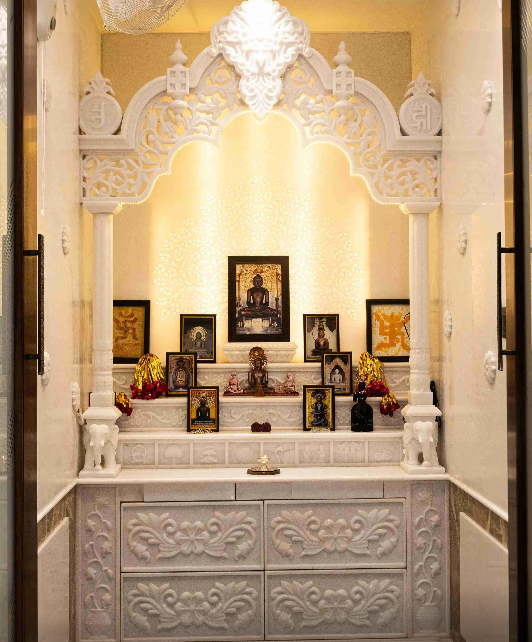
Your pooja temple is the holy space in your house dedicated to prayer, meditation, and your family’s daily devotion. Traditionally, pooja rooms were integral to our houses but with our increasing trend of smaller apartments and contemporary homes, it’s becoming difficult to create them. Considering the limited space, current interior design styles, and people’s needs and preferences, they’re going for a more customised option.
A custom pooja temple for homes is custom-made according to the space you have, your needs, and how well it matches your home decor! It becomes the most natural part of your home whilst retaining the sanctity of the pooja space.
Every Home Has Different Space Requirements
One of the most obvious benefits to using a custom designed pooja temple for home is that the size and layout of each Indian house is unique.
Some houses are fortunate enough to have a separate pooja room, while others might need to place a temple in the living room, dining hall or a discrete nook of the house.
The size and the type of house can often determine whether a simple or elaborate marble temple design would be ideal. Making it customised eliminates the need to cram a standard sized temple structure in your house.
See also: 5 Signs Your Home’s Plumbing Needs a Professional Inspection
Designing Around the Home’s Interior Style
The interior of the modern houses are of various nature. Some are elegant minimalistic interiors, others are designed with traditional fittings, some showcase architectural beauty and opulence. It has become possible to design pooja temples for these designs without compromising with their religious significance.
Dimensions, patterns of carving, pillars, arches, decorative features can be customized to harmonize with the ambience of the interiors without compromising the spiritual aura of the temple. The balance of traditional artwork and modern design is a vital component in the design of home temples nowadays.
Customisation Begins with Understanding the Space
Designing a custom pooja temple usually starts with understanding the space where it will be installed.
Factors such as room dimensions, ceiling height, wall placement and available floor area all influence the final design. Careful planning helps ensure that the temple fits comfortably within the room while allowing sufficient space for daily worship and movement.
Instead of relying on standard sizes, the design is developed around the unique characteristics of the home. This personalised approach helps create a temple that appears thoughtfully integrated rather than simply placed inside the room.
Visualising the Design Before Construction
One of the advantages of custom temple design is the ability to visualise the finished result before manufacturing begins.
Modern design processes often include detailed planning through two-dimensional layouts followed by three-dimensional visualisations. These design stages allow homeowners to understand how the temple will appear within their space before any marble is carved.
Viewing the design in advance also provides an opportunity to refine proportions, decorative features and placement. Small adjustments made during the planning stage can contribute to a more balanced and practical final outcome.
A carefully planned design process reduces uncertainty and ensures that the finished temple reflects both functional needs and personal preferences.
Marble Continues to Be a Preferred Material
Material selection plays an important role in the appearance and durability of a home temple.
Marble remains one of the most widely used materials because of its natural elegance, strength and ability to showcase intricate carvings. Fine detailing, ornamental pillars and decorative motifs can be carved into marble while maintaining clean edges and lasting visual appeal.
White marble is particularly popular because it creates a calm and peaceful atmosphere that complements many different interior styles. Whether used in a compact temple or a large pooja room, marble provides a timeless appearance that suits both traditional and contemporary homes.
Personalising the Temple Design
Every family has its own preferences when designing a pooja space.
Some homeowners prefer simple temple designs with clean architectural lines, while others choose more elaborate carvings inspired by traditional temple architecture. Customisation makes it possible to select features that reflect individual tastes without compromising functionality.
The number of deities, shelf arrangements, decorative arches, domes and carved pillars can all influence the final design. Storage for prayer essentials may also be incorporated into the layout where appropriate.
Rather than following a single standard template, custom design allows the temple to be created according to the family’s unique requirements.
Modular Construction Supports Modern Installation
As home temple designs have evolved, modular construction has become an increasingly practical solution.
Instead of producing a temple as one large structure, modular designs are created in carefully planned sections that can be assembled after delivery. This approach simplifies transportation while making installation more manageable, particularly in multi-storey homes or apartments where access may be limited.
Despite being assembled from individual components, the finished temple maintains a seamless appearance. Modular construction combines practical installation with the visual appeal of a traditionally crafted marble temple.
Blending Tradition with Contemporary Living
Modern homes often combine traditional values with contemporary architecture, and pooja temples have evolved in the same way.
While the purpose of the temple remains rooted in devotion, its design can be adapted to suit present-day living spaces. Traditional carvings, marble craftsmanship and architectural features can coexist with clean interior lines, neutral colour palettes and modern furniture.
This thoughtful combination allows the temple to remain the spiritual centre of the home while also contributing to the overall interior design. Instead of appearing separate from the living space, it becomes an integral part of the home’s visual identity.
Careful Craftsmanship Makes a Difference
The quality of craftsmanship plays an important role in custom temple design.
Skilled artisans work with natural marble to create fine carvings, symmetrical proportions and detailed architectural elements that reflect traditional temple design. Precision throughout the carving and finishing process helps achieve consistency across every component of the temple.
Attention to detail is especially important in custom projects because every design is unique. From the smallest decorative feature to the overall structure, careful workmanship contributes to both the beauty and longevity of the finished temple.
Conclusion
Custom pooja temples offer a thoughtful way to create a sacred space that fits naturally within modern homes. By considering available space, interior design, material selection and individual preferences, these temples can be planned to suit a wide variety of living environments without losing their traditional significance.
From personalised layouts and detailed 3D planning to marble craftsmanship and modular construction, every stage of the design process contributes to a temple that is both functional and visually harmonious. As homes continue to evolve, custom pooja temples demonstrate how traditional values and contemporary design can work together to create meaningful spaces for everyday worship.