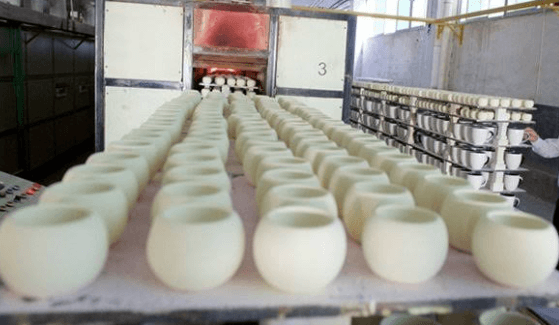
Fumed silica has long been associated with coatings, adhesives, and rubber reinforcement applications, but its role within ceramics manufacturing represents a less commonly discussed, yet increasingly relevant, application area. As ceramic manufacturers continue pursuing improved performance characteristics across mechanical, thermal, and optical dimensions, fumed silica in ceramics formulation has emerged as a valuable tool worth deeper examination.
See also: Fresno Businesses Are Growing Faster with IT Systems Built for Stability and Scale
Why Fumed Silica Attracts Interest in Ceramic Formulation
The same fundamental characteristics that make fumed silica valuable across other industries, namely its extremely fine particle size, high purity, and large surface area, also translate into potential benefits within ceramic manufacturing contexts. Its nanoscale particle structure can contribute to improved particle packing density during formulation, potentially supporting more effective densification during the subsequent sintering process.
Beyond its physical packing contribution, fumed silica’s chemical composition as silicon dioxide also means it can, in certain formulations, participate directly in the ceramic material’s chemistry, influencing sintering behavior and final material properties beyond simply acting as an inert filler.
Distinguishing Fumed Silica from Other Ceramic Raw Materials
It’s worth noting that fumed silica differs meaningfully from conventional silica raw materials traditionally used in ceramics manufacturing, primarily due to its significantly finer particle size and higher purity achieved through its distinctive flame hydrolysis manufacturing process. These characteristics are what enable fumed silica to contribute functional benefits that conventional, coarser silica materials typically cannot provide within the same formulation context.
Contribution to Green Body Density
One of the more practically significant contributions of fumed silica in ceramics relates to its influence on green body density before firing. By helping fill interstitial spaces between larger primary ceramic particles, fumed silica can contribute to a more tightly packed initial structure, which often translates into improved densification outcomes during subsequent sintering, potentially resulting in reduced residual porosity in the finished ceramic product.
Influence on Sintering Behavior
Fumed silica’s high surface energy, a direct consequence of its fine particle size, can also influence sintering kinetics within certain ceramic systems, sometimes enabling manufacturers to achieve comparable densification outcomes at somewhat reduced sintering temperatures compared to formulations relying solely on conventional raw materials, offering potential processing efficiency benefits.
Applications Where Fumed Silica Provides Meaningful Value
Fumed silica finds particular relevance in specialty ceramic applications where achieving fine, uniform microstructures with minimal porosity is a primary objective, including certain translucent and optically functional ceramic products, as well as technical ceramics where enhanced mechanical properties resulting from improved microstructural uniformity provide meaningful performance advantages.
A more comprehensive technical discussion of how fumed silica specifically contributes to ceramic formulation and processing outcomes, including its particular role in supporting improved transparency in specialty ceramic products, is available in this resource on fumed silica in ceramics manufacturing, which explores these applications in additional technical depth.
Dispersion Challenges Specific to Ceramic Processing
As with other applications, successfully incorporating fumed silica into ceramic formulations requires careful attention to dispersion technique, since its strong tendency toward agglomeration can, if not adequately addressed, introduce defects rather than delivering the intended microstructural benefits. Ceramic manufacturers typically need to develop dispersion protocols specific to their particular processing methods, whether wet or dry, to achieve consistent, reliable incorporation.
Weighing the Practical Tradeoffs
While fumed silica offers genuine potential benefits within ceramic formulation, manufacturers need to weigh these benefits against practical considerations including raw material cost, which is typically higher than conventional ceramic raw materials, and the additional processing complexity often required to achieve adequate dispersion, before committing to its incorporation within a standard production formulation.
Frequently Asked Questions
Is fumed silica interchangeable with conventional silica raw materials in ceramic formulations? No, its significantly finer particle size and different manufacturing process mean fumed silica behaves quite differently within a ceramic formulation compared to conventional silica raw materials, making direct substitution generally inappropriate without formulation adjustment.
Does incorporating fumed silica always improve ceramic properties? Not necessarily; benefits depend heavily on proper dispersion and appropriate addition levels tailored to the specific ceramic system, meaning inadequately optimized incorporation could fail to deliver meaningful improvement or even introduce processing challenges.
What ceramic manufacturing processes are best suited to incorporating fumed silica? Both wet and dry processing methods can potentially incorporate fumed silica successfully, though the specific dispersion strategy needed often differs between these approaches, requiring process-specific optimization for reliable results.
Conclusion
Fumed silica in ceramics represents a specialized but genuinely valuable formulation strategy for manufacturers pursuing improved densification, microstructural uniformity, and in certain applications, enhanced optical transparency. Successfully realizing these benefits requires careful attention to dispersion technique and a clear understanding of how this fine, high-purity additive interacts with the specific ceramic system being developed.