A properly sized electric sauna heater, matched to the cubic footage of a small home sauna room rather than picked by floor space alone, reaches 170 to 190 degrees Fahrenheit reliably enough to support a consistent post-workout recovery routine. Regular sauna bathing at those temperatures is linked in long-term cohort research to favorable cardiovascular markers and lower cardiovascular mortality, though that data reflects habitual bathers over years rather than single sessions after a workout. For a small converted room, closet conversion, or basement corner, getting heater sizing right matters more than the square footage of the space itself.
How Is Heater Size Determined for a Small Recovery Room?
Manufacturers size heaters by cubic footage, meaning ceiling height matters as much as floor area. A tight 4-by-5-foot room with an 8-foot ceiling has roughly the same air volume as a slightly larger room with a lower ceiling, so both would call for a similar heater rating. A common sizing benchmark is roughly 1kW per 40 to 50 cubic feet for a well-insulated room, meaning a 200-cubic-foot small sauna room typically calls for a heater in the 4 to 6kW range. Undersizing the heater for the room’s actual volume is the most common mistake in small-space installs, since it leaves the heater struggling to hold temperature during longer sessions.
What Electrical Work Does a 6kW Heater Need?
A 6kW electric sauna heater draws roughly 25 amps at 240V, which requires a dedicated circuit sized to that load, not a shared circuit with other outlets or appliances. This is not a DIY wiring job for most homeowners; it needs a licensed electrician to run the correct wire gauge and install a properly rated breaker. Because small recovery-focused installs are often tucked into a basement or converted closet, checking that the electrical panel has capacity for a new 240V circuit before committing to a heater size avoids a mid-project surprise.
How Does Recovery Timing Work With a Small Sauna Room?
A compact room reaches temperature faster than a larger cabin because there is less air volume to heat, which is one practical advantage of a small-space setup for post-workout use. Waiting roughly 20 to 30 minutes after a hard training session lets heart rate settle before adding heat stress, though this is a comfort preference rather than a strict requirement for most healthy adults. A 10 to 15 minute session is a reasonable starting point for someone new to combining sauna heat with a training routine, with room to extend as tolerance builds over several weeks.
What Do the Cardiovascular Studies Actually Support for This Use Case?
The strongest cardiovascular data comes from cohorts studying habitual sauna bathers over years, not people using heat specifically as post-exercise recovery. A joint analysis of sauna bathing and cardiorespiratory fitness found the combination associated with the lowest cardiovascular and all-cause mortality risk, suggesting the two habits may complement each other, though this remains an association rather than a proven cause-and-effect relationship. Short-term studies measuring blood-based cardiovascular markers after single sauna sessions in experienced bathers found favorable shifts within hours, which supports the idea that individual sessions produce a measurable response even outside the long-term mortality data.
What Should a Small-Space Buyer Look For in a Heater?
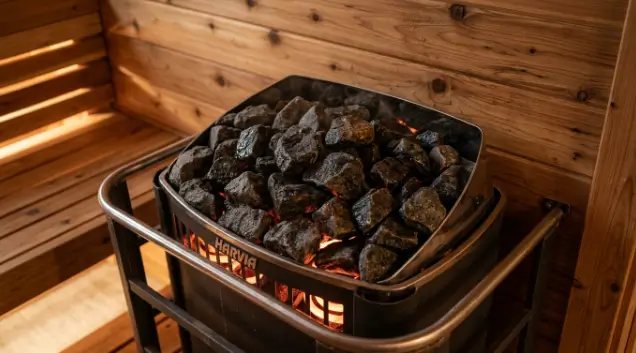
Beyond raw kW rating, check the heater’s stone capacity, since more stone mass helps hold temperature steadier during a session, and confirm the guard or shield clearances fit the room’s tight dimensions. A digital control panel with a timer is a practical feature for a recovery routine that needs to fit around a training schedule. Buyers narrowing down a compact heater for a small room can compare specs directly at sweatdecks.com/products/huum-drop-6kw-sauna-heater, checking stone load and clearance requirements against the room’s actual dimensions before ordering.
How Should a Small Recovery Room Handle Ventilation and Airflow?
A small sauna room needs the same basic vent setup as a larger cabin, typically a fresh-air intake near the floor by the heater and an exhaust vent higher up near the ceiling or bench, but the proportions matter more in a tight space since there is less air volume to buffer a poorly placed vent. A room that feels stuffy or unusually hard to breathe in partway through a session is more often a ventilation problem than a heater problem, and adjusting the vent opening is a simpler fix than assuming the heater is undersized. For a converted closet or basement nook being built specifically for post-workout recovery sessions, getting the vent placement right during construction saves troubleshooting an uncomfortable session later. A digital hygrometer is not required, but some owners in small rooms find it useful for confirming the space is not trapping excess humidity between sessions, particularly if steam is used occasionally.
Does a Recovery-Focused Room Change the Electricity Cost Picture?
Using a 6kW heater for shorter 10 to 15 minute recovery sessions two or three times a week draws less total electricity over a month than a longer traditional bathing routine would, since most of the energy draw happens during the warm-up phase and total session time stays lower. A realistic estimate for a small room used this way lands well under $10 a month in most parts of the country at standard residential electricity rates, which is a minor cost relative to what many people already spend on other recovery tools like massage or physical therapy visits.
Frequently Asked Questions
What size sauna heater fits a small home sauna room?
Heater sizing follows cubic footage rather than floor space alone. A small room around 150 to 250 cubic feet, common for a converted closet or basement corner, typically pairs with a 4.5 to 6kW heater, while smaller nooks under 150 cubic feet may only need 3 to 4.5kW.
Can a 6kW sauna heater run on a standard household outlet?
No. A heater in the 6kW range needs a dedicated 240V circuit, not a standard 120V wall outlet. That circuit has to be sized to the heater’s amperage draw and installed by a licensed electrician.
How soon after a workout should the heater session start?
Waiting 20 to 30 minutes after intense training lets heart rate come down from exercise levels before adding heat stress. This is a comfort and pacing consideration rather than a strict rule, and most healthy adults can adjust the gap based on how they feel.
Does a smaller sauna room heat up faster with the same heater?
Yes. A smaller cubic footage means less air volume for the heater to bring to temperature, so a compact recovery-focused sauna room typically reaches operating temperature faster than a larger room using a similarly sized heater.
Do stones need to be replaced on a regular schedule?
Sauna stones crack over time from repeated heating and, if steam is used, from water contact, so most manufacturers recommend inspecting them every season and replacing cracked stones as needed rather than on a fixed calendar.
References
- Association between sauna bathing and fatal cardiovascular and all-cause mortality events, JAMA Internal Medicine, 2015.
- Joint associations of sauna bathing and cardiorespiratory fitness on cardiovascular and all-cause mortality risk: a long-term prospective cohort study, Annals of Medicine, 2018.
- Short-term effects of Finnish sauna bathing on blood-based markers of cardiovascular function in non-naive sauna users, Heart and Vessels, 2018.
By Claire Donovan